ZapZorb® for Environmental Remediation
Solidify CCR, sludge, sediment and oily spills on site, then haul less.
Remediation waste is rarely one thing. ZapZorb gives you five grades to match it, plus a treatability lab to confirm the dosage before you mobilize.
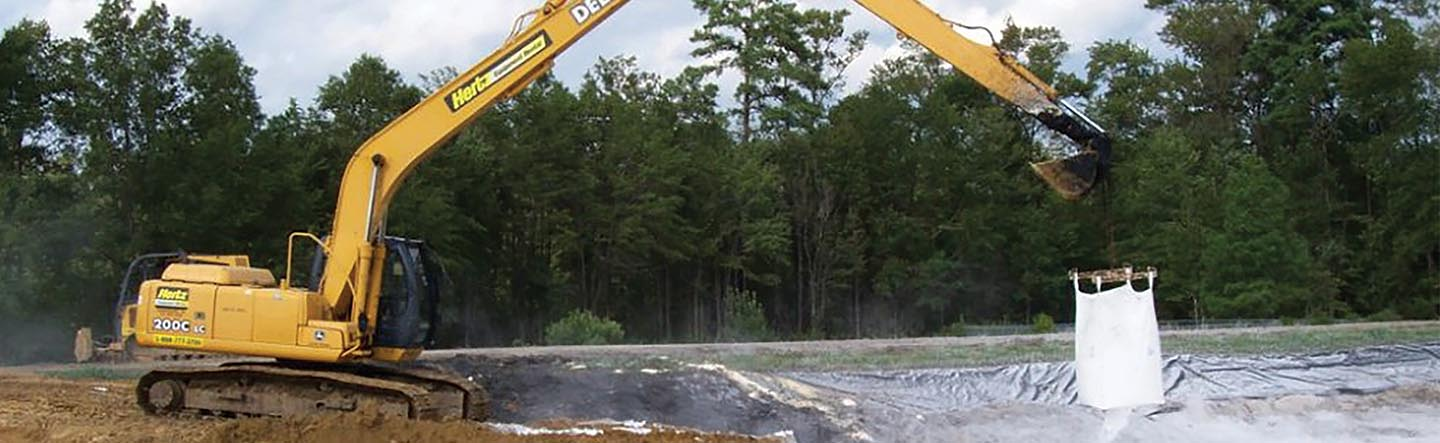
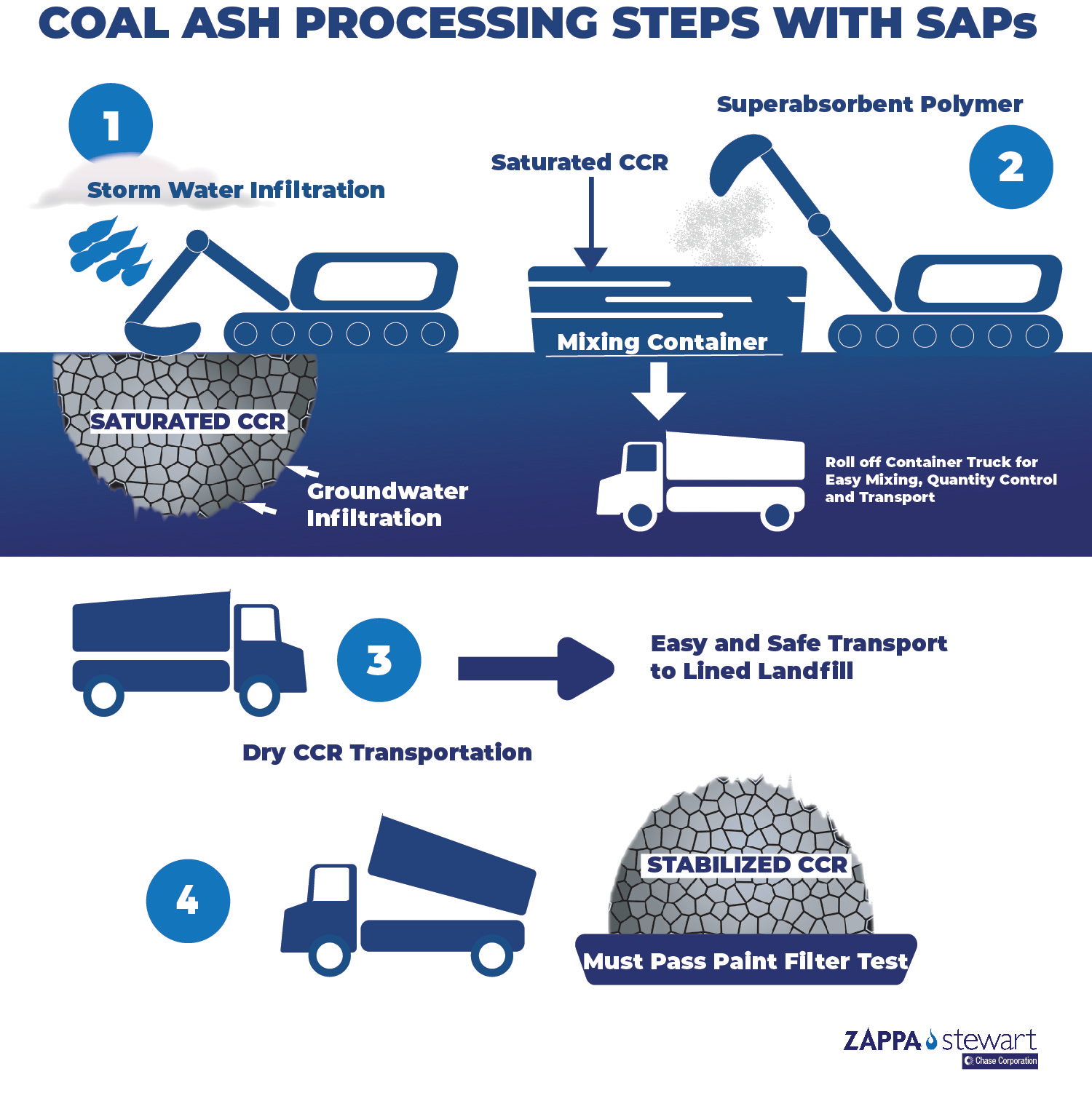
Coal ash / CCR — Best Fit ZapZorb Premium. Management of coal combustion residuals (CCRs), or coal ash, presents many environmental and operational challenges. Most CCR impoundments or ponds are saturated with water, which must be removed in order to complete pond closure. Superabsorbent polymer (SAP) technologies have been proven to rapidly solidify liquid-bearing CCR material and when applied at appropriate dosage rates (less than 1%) are acceptable in structural fill landfills.
Sludge and sediment — Best Fit: ZapZorb Premium or ZapZorb P6. Liquid-bearing wastes such as wastewater treatment sludge, contaminated sediments, mine tailings, tank bottom sludge and many other industrial waste streams are challenging and costly to manage and pose severe threats to the natural environment. See the Sugar Creek WWTP case study.
Oil, grease and solvent spills; contaminated soil — Best Fit: ZapZorb OA. When the waste has oil in it, you need a solidifier that goes after the oil, not the water. ZapZorb OA is oil-selective and water-repelling, so it works in mixed oil and water and helps treated material pass the EPA Paint Filter Test (Method 9095B). For aqueous spills where speed matters, Best Fit: ZapZorb Fines.
Liquid-bearing wastes such as wastewater treatment sludge, contaminated sediments, mine tailings, tank bottom sludge and many other industrial waste streams are challenging and costly to manage and pose severe threats to the natural environment.
Superabsorbent polymers (SAP) are widely used by site remediation contractors to rapidly solidify liquid-bearing waste on-site for transport and disposal at solid waste landfills.
Compared to commodity absorbents and cement-products, SAP technologies offer superior absorbency and retention which allows remediation professionals, waste treatment facilities, and landfills to minimize treatment amendment quantity, time on-site, disposal costs, and releases of contaminants to the natural environment. Furthermore, SAPs are safe to handle and do not require special health and safety precautions or PPE.
Features & Benefits: